
Info
Legal
© 2025 Feels Co.

Hand pointing up icon Summary & key points

Before any conflict between people, the first weapon drawn is language. That's why we call them fighting words. And in the theatres of human conflict, sometimes the impossible becomes the improbable – and a legend emerges. If you talk to other human beings, you are also a linguist. LINGA has innovative tools, products, and services to help you level up in this arena and get more of what you want from others through the power of human language. There's a linguist in all of us. Start leveling up today.
Feels Score: 9 in

Hand pointing up icon Summary & key points

In 2001, Ukrainian boxer Oleksandr Usyk won a championship and, when asked how he felt, responded with the unusual phrase "I'm feel. I'm very feel." This use of "feel" as a noun emphasizes the Sensation attribute, indicating an overwhelming state of bodily-sensory perception after becoming heavyweight champion.
Feels Score: 9 in

Block quote icon Transcript

Follow along using the transcript below or move to side panel.

Showing transcript on side panel. Move transcript here.

0:00
Felicia @ Feels
I'm feel. I'm very feel.
0:06
Felicia @ Feels
In 2001, Ukrainian professional boxer Oleksandr Usyk won a contest against a rival opponent and proceeded to give an interview.
0:13
Felicia @ Feels
When asked how he felt about becoming the world champion, Usyk said, "I'm feel. I'm very feel."
0:18
Felicia @ Feels
Words like "feel" represent the Sensation attribute, and Usyk's uncommon use of the verb "to feel" as a noun represents a form of emphasis.
0:24
Felicia @ Feels
That's why Usyk's language reflects an Ultra-High Sensation score.
0:28
Felicia @ Feels
Here's the full clip.
0:29
Felicia @ Feels
Oleksandr, how do you feel? Heavyweight champion of the world.
0:34
Felicia @ Feels
I'm feel. I'm very feel.
0:38
Felicia @ Feels
What's that?
0:39
Felicia @ Feels
Heavyweight champions.

FeelsMap logo as chart diagram icon FeelsMap

See the logical linguistic relationships in this Feel.

FeelsMap

Hand pointing up icon Summary & key points

On June 15, 2012, South Korean K-pop artist Psy stunned the world with the release of his hit single called "Gangnam Style (강남스타일)." The viral music video features lots of action, amusing dance routines, and bright colors. The lyrics of the song discuss the culture of affluent individuals in the Gangnam region of South Korea. Moreso, Psy's lyrics describe nightlife, his behavior, attitudes towards potential romantic partners, and his affluent lifestyle. Psy's inclusion of enough details without disclosing more sensitive information demonstrates a typical example of the Specificity attribute.
Feels Score: 5 in
LINGA – Our business is language itself™

Hand pointing up icon Summary & key points

LINGA is a psycholinguistics technology company that provides authorship identity verification as a service via our proprietary Linguistic Fingerprint™ technology. Through the LINGA web application, guests complete writing prompts in order to build their Linguistic Fingerprint™. Once built, guests can discover their true selves as expressed in the form-factor of writing. Guests can also scan written documents in order to generate a unique Authorship Verification Certificate, which is certified by LINGA and available as a downloadable PDF file. This certificate indicates whether or not the scanned document matches our guest's Linguistic Fingerprint™, and is backed by our $1,000,000 Authorship Integrity Defense Guarantee (SM · Terms apply). Individual guests can use LINGA to verify and defend authorship integrity for important written works like books, articles, papers, speeches, and more.

Hand pointing up icon Summary & key points

In the hit poker movie Rounders (1998), soon-to-be dropout law school student Mike McDermott is facing a stressful poker game against Teddy KGB, a Russian mobster with his own poker club. Mike previously lost his funds to Teddy KGB and has loan sharks after him. During the final poker showdown between the two, Mike is folding good hands because he notices that Teddy KGB has him beat when he splits open and eats an Oreo cookie. This cue allowed Mike to dominate most of the hands until Teddy KGB figured it out. The outburst indicates that the Russian realized his own tell. In using phrases like "Lays down a monster. The f*** did you lay that down. Should have paid me off ...," Teddy vocalizes his own inability to use cues, logical reasoning, and predictive consideration. This is reinforced by the expletives. Teddy KGB's self-admitted mistake after speaking in a confident manner demonstrates a near-bottom example of the Inference attribute.

Feels Score: 2 in

Hand pointing up icon Summary & key points

In the movie Sex and the City (2008), Carrie is about to get married to John James Preston, or Mr. Big, and he gets cold feet while watching Carrie in his limousine. Carrie and Mr. Big speak on the phone and he tells her that he can't get married to her. Then, Mr. Big changes his mind as he is being driven and spots Carrie in the car on the other side of the road. They both pull over, get out, and confront one another. Although Mr. Big apologizes and seems as though he wants to get married – the events were too much for Carrie to bear – and she lashes out with her words and flowers at Mr. Big. She explains how she knew that he was going to do that, and how he humiliated her, all before Carrie's friends take her back into a vehicle and exit. Carrie's tears, physical aggression, and feelings of humiliation highlight an extreme instance of the Emotion attribute.
Feels Score: 9 in

Ultra Low

0–5% percentile
An ultra low attribute score is exceptionally rare because it represents 5% of the entire population. In a room with 100 other people, a person with an ultra low attribute score would be lower than 95 of them and higher than none of them.
Note: Feels uses a 9-point scoring scale that ranges from Ultra Low to Ultra High according to a normal distribution. See our methodology.

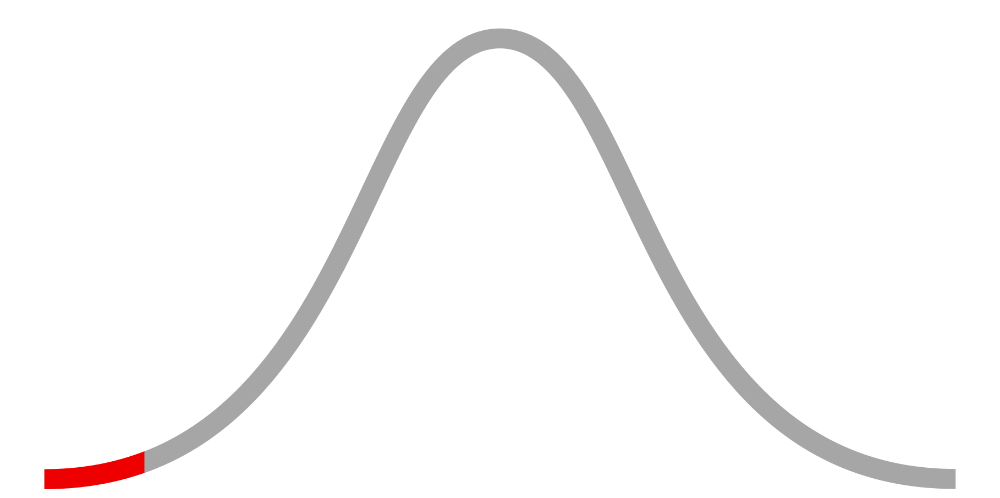
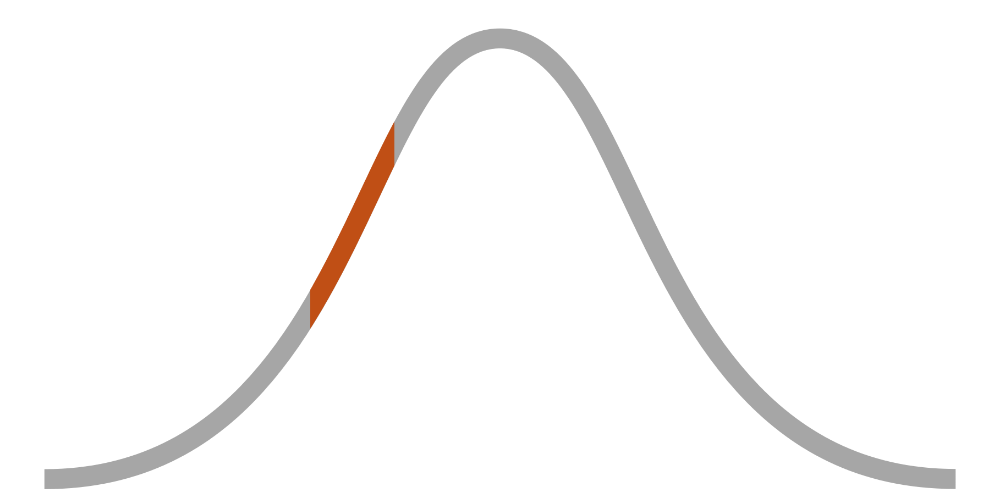
Very Low

5–10% percentile
A very low attribute score is rare because it represents 5% of the entire population. In a room with 100 other people, a person with a very low attribute score would be higher than five of them and lower than 90 of them.
Note: Feels uses a 9-point scoring scale that ranges from Ultra Low to Ultra High according to a normal distribution. See our methodology.

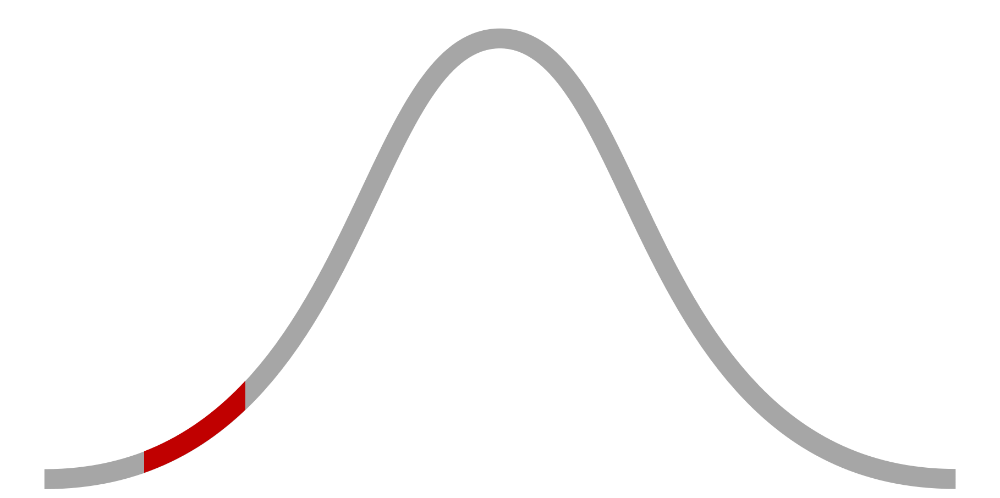
Low

10–20% percentile
A low attribute score is somewhat uncommon and represents 10% of the entire population. In a room with 100 other people, a person with a low attribute score would be higher than ten of them and lower than 80 of them.
Note: Feels uses a 9-point scoring scale that ranges from Ultra Low to Ultra High according to a normal distribution. See our methodology.

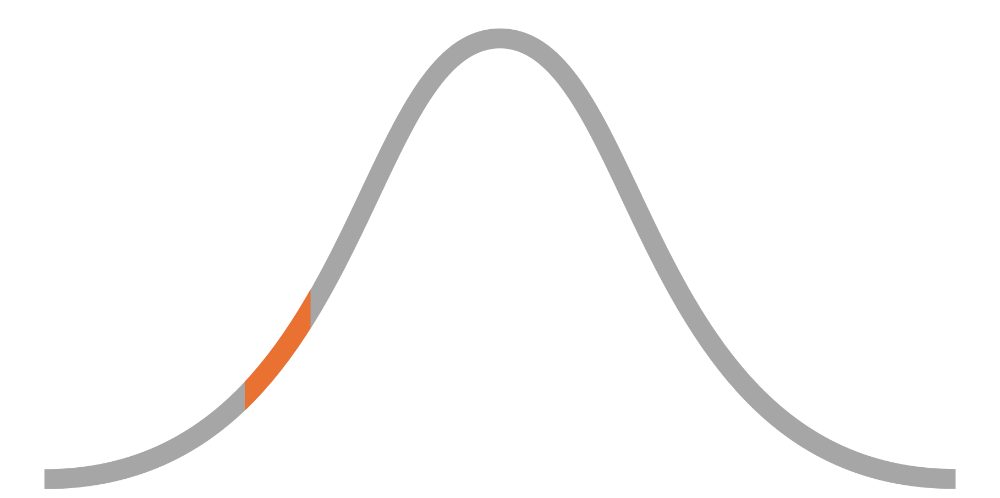
Slightly Low

20–40% percentile
A slightly low attribute score is common and represents 20% of the entire population. In a room with 100 other people, a person with a slightly low attribute score would be higher than 20 of them and lower than 60 of them.
Note: Feels uses a 9-point scoring scale that ranges from Ultra Low to Ultra High according to a normal distribution. See our methodology.

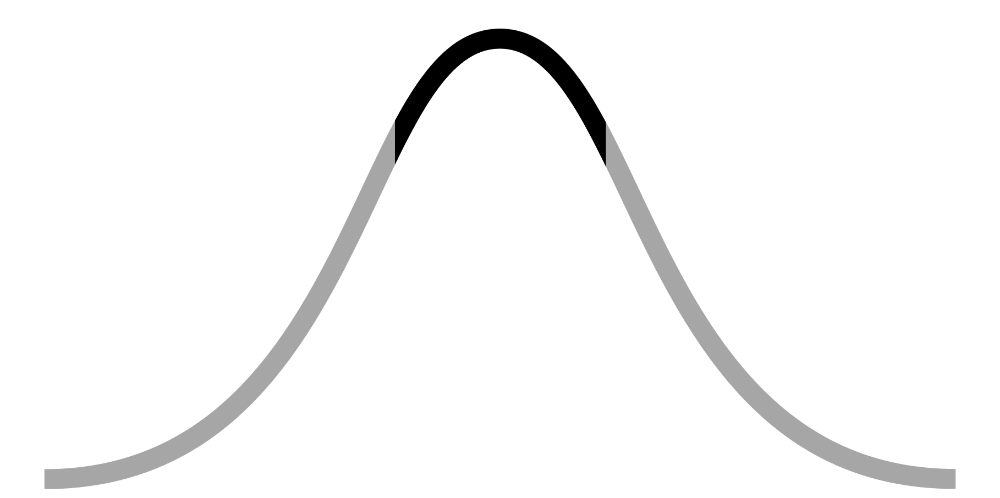
Average

40–60% percentile
An average attribute score is typical and represents 20% of the entire population. In a room with 100 other people, a person with an average attribute score would be higher than 40 of them and lower than 40 of them.
Note: Feels uses a 9-point scoring scale that ranges from Ultra Low to Ultra High according to a normal distribution. See our methodology.

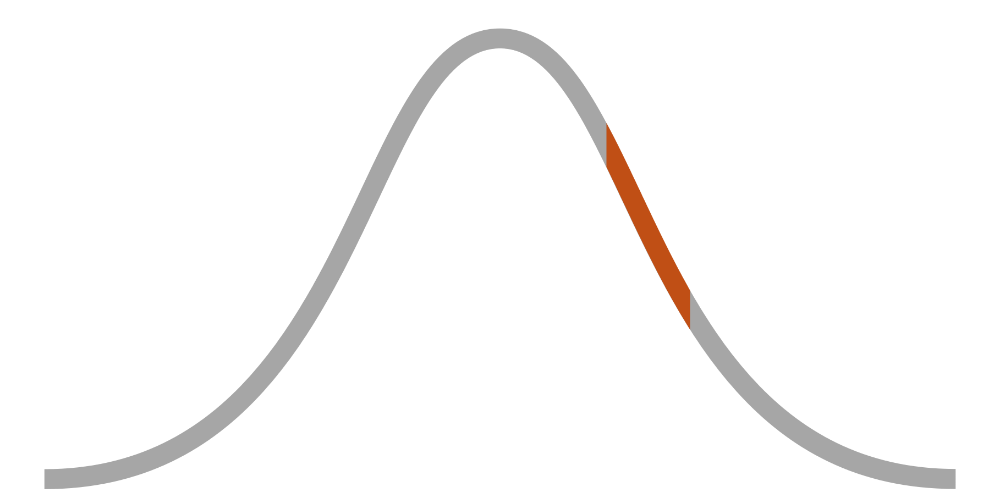
Slightly High

60–80% percentile
A slightly high attribute score is common and represents 20% of the entire population. In a room with 100 other people, a person with a slightly high attribute score would be higher than 60 of them and lower than 20 of them.
Note: Feels uses a 9-point scoring scale that ranges from Ultra Low to Ultra High according to a normal distribution. See our methodology.

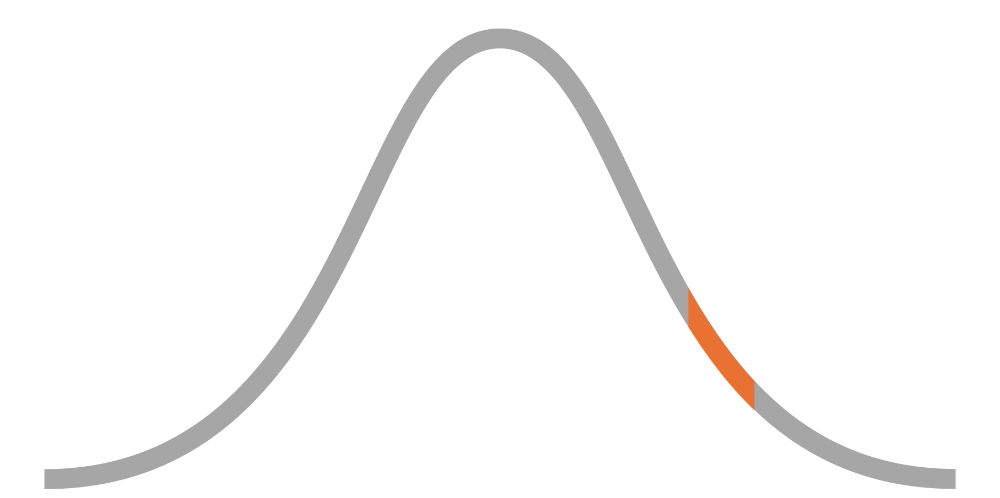
High

80–90% percentile
A high attribute score is somewhat uncommon and represents 10% of the entire population. In a room with 100 other people, a person with a high attribute score would be higher than 80 of them and lower than 10 of them.
Note: Feels uses a 9-point scoring scale that ranges from Ultra Low to Ultra High according to a normal distribution. See our methodology.

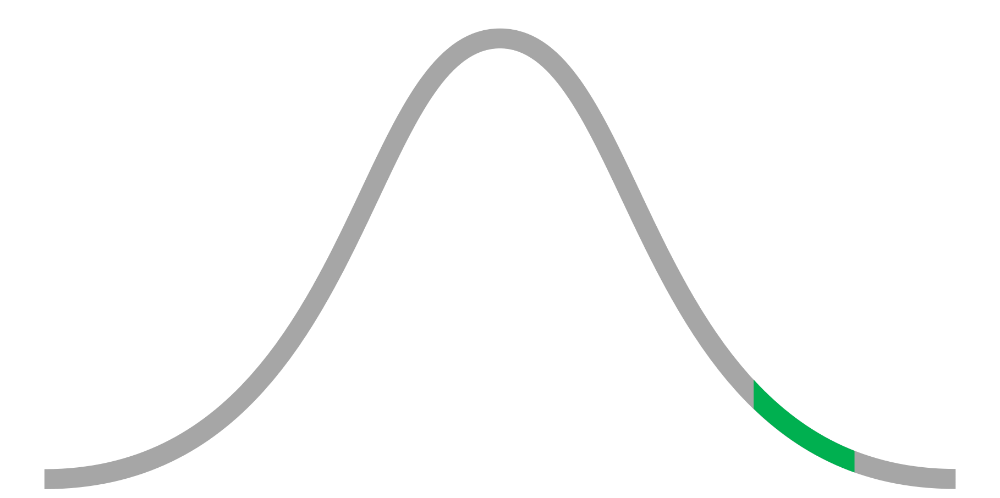
Very High

90–95% percentile
A very high attribute score is rare because it represents 5% of the entire population. In a room with 100 other people, a person with a very high attribute score would be higher than 90 of them and lower than five of them.
Note: Feels uses a 9-point scoring scale that ranges from Ultra Low to Ultra High according to a normal distribution. See our methodology.

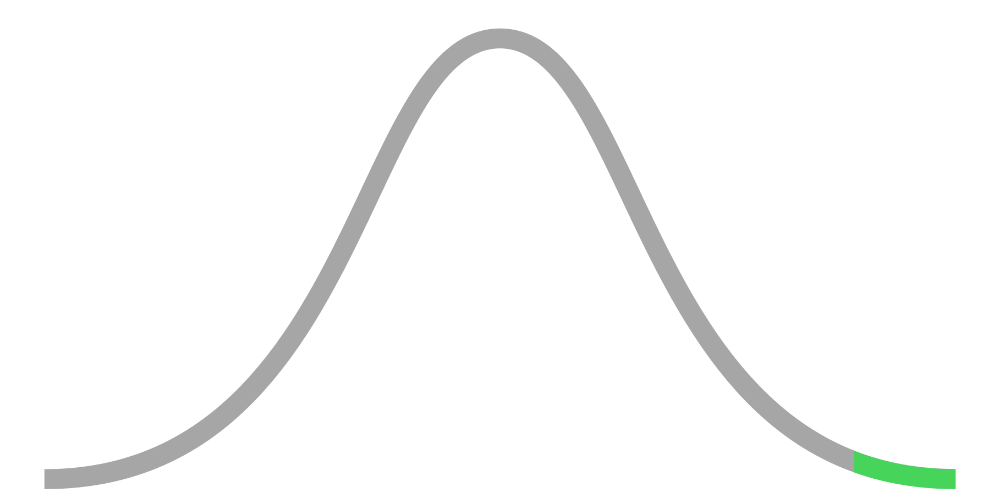
Ultra High

95–100% percentile
An ultra high attribute score is exceptionally rare because it represents 5% of the entire population. In a room with 100 other people, a person with an ultra high attribute score would be higher than 95 of them and lower than none of them.
Note: Feels uses a 9-point scoring scale that ranges from Ultra Low to Ultra High according to a normal distribution. See our methodology.