
Info
© 2026 Feels Co.
 Summary & key points
In 1998, the Department of Justice sued Microsoft for antitrust violations. Bill Gates, the founder and leader of the company, had to testify. In widely circulated videos, Gates is shown evading some questions on the grounds that he does not understand. The lawyer tried to corner Gates on many occasions, without success.




Summary & key points
In season 3, episode 10 ("Three Girls and a Monster") of Powerpuff Girls on Cartoon Network, a large monster is attacking the city. Bubbles steps in alone and confronts the massive beast on her own. She then asks politely if the monster may leave because of the trouble caused – and so the monster went back to the water. Bubbles' kind, respectful demeanor toward the beast exemplifies the Formality attribute, as she did not cause offense or distaste with her spoken words.

Summary & key points
When Ukrainian president Volodymyr Zelenskyy met U.S. President Donald J. Trump, the visitor made the mistake of telling President Trump how Americans were going "to feel" in the future. This caused a problem as the discussion unfolded.

Summary & key points
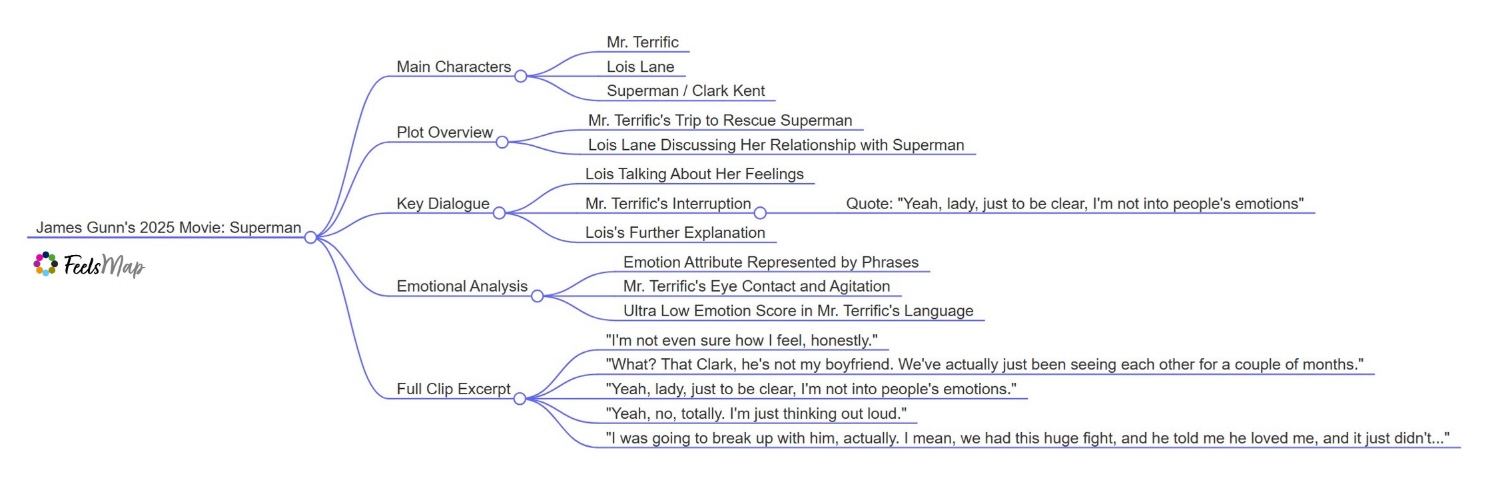
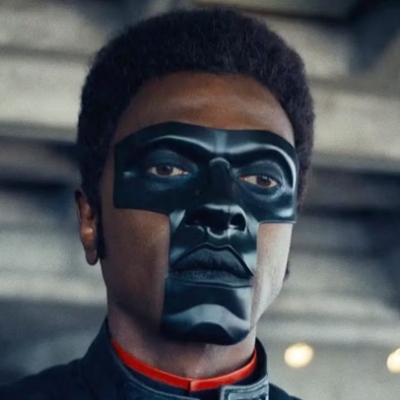
In James Gunn's 2025 movie Superman, Mister Terrific joins Lois Lane on a mission to rescue Superman. During their conversation about Lois' relationship with Clark Kent, Mister Terrific interrupts, stating, "I'm not into peoples' emotions," accompanied by intense, penetrating eye contact. This lack of interest and emotional expression reflects the Emotion attribute.
 Transcript
Follow along using the transcript below or move to side panel.
Showing transcript on side panel. Move transcript here.
0:01
Felicia @ Feels
Yeah, lady, just to be clear ... I'm not into peoples' emotions.
0:05
Felicia @ Feels
Yeah. No. Totally ... I was going to break up with him actually. We had this huge fight and he told me he loved me and it just didn't ...
0:13
Felicia @ Feels
In James Gunn's 2025 movie called Superman, comic book character Mister Terrific embarks on a trip to rescue Superman alongside Lois Lane.
0:22
Felicia @ Feels
As Lois started chatting about her relationship with Superman, or Clark Kent, Mister Terrific interrupted Lois and said:
0:27
Felicia @ Feels
"Yeah, lady ... just to be clear. I'm not into peoples' emotions," and proceeded to stare at her intensely.
0:33
Felicia @ Feels
Phrases like "I'm not into peoples' emotions" represent the Emotion attribute and Mister Terrific's direct eye contact with high visibility of the sclera, or white part of the eye, represents his agitation.
0:45
Felicia @ Feels
That's why Mister Terrific's language reflects an Ultra Low score in Emotion.
0:49
Felicia @ Feels
Here's the full clip.
0:53
Felicia @ Feels
I'm not even sure how I feel, honestly.
0:54
Felicia @ Feels
What?
0:56
Felicia @ Feels
About Clark ... he's not my boyfriend. We've actually just been seeing each other for a couple of months ...
0:59
Felicia @ Feels
Yeah, lady, just to be clear. I'm not into peoples' emotions.
1:03
Felicia @ Feels
Yeah, no, totally. I'm just thinking out loud. I was going to break up with him actually. I mean, we had this huge fight and he told me he loved me and it just didn't ...
 F
Feels Map
See the logical linguistic relationships in this Feel.
Summary & key points
In the hit movie Trainwreck (2015), starring Amy Schumer, Amy's boss Dianna seems to have little patience for her father's death and funeral.

Summary & key points
In season 6, episode 10 of the hit HBO show called Game of Thrones (2003), Cersei Lannister is about to execute a plan to blow up the location of her trial – and she's notably absent. Of all people present, only Margaery Tyrell knows what's really going on. Margaery interrupts the high priest and explains that Cersei's absence is not intentional, but calculated. Margaery infers there is danger and urges everyone to leave, even at the expense of her normally polite demeanor. Sure enough, the building soon exploded as Cersei watched in satisfaction. Margaery's ability to engage in 'mental time travel' is demonstrated with her explanation as to why Cersei was not there, as well as her urge to exit the premises. This dialogue and behavior highlights the Inference attribute, even if it was too late for her character.