
Info
Legal
© 2025 Feels Co.

Hand pointing up icon Summary & key points

In Season 7, Episode 6 ("Beyond the Wall") of the hit HBO show Game of Thrones (2017), a battle rages between Jon Snow's group and the White Walkers, led by the Night King. As the dragon Viserion is flying around, the Night King is handed a spear by one of his own soldiers. The Night King then aims at the dragon and strikes it, taking the beast down. Later, the Night King walks up to the line separating the two camps and makes eye contact with Snow as he raises his arms. The Night King never speaks or makes any sounds, thus giving no verbal information to anyone, and this demonstrates an extreme-low example of the Volubility attribute.
Feels Score: 1 in

Hand pointing up icon Summary & key points

In the hit Netflix movie Happy Gilmore 2 (2025), Happy's golf doubles partner gets injured after falling on ice and he needs a substitute. Luckily, behind him is Shooter McGavin, his former golf rival. It only takes Happy a few words to ignite Shooter's passion for golf enough to get him to say yes. With Shooter's help, they both win the round. Happy's efforts to convince Shooter, although successful, included insults and jabs. Plus, Shooter seemed eager to participate either way. Happy's general effort to get Shooter to do what he wants is a typical demonstration of the Apperception attribute.
Feels Score: 5 in

Hand pointing up icon Summary & key points

Jim questions William about Delos investing in the Westworld theme park.

Feels Score: 3 in

Hand pointing up icon Summary & key points

Before any conflict between people, the first weapon drawn is language. That's why we call them fighting words. And in the theatres of human conflict, sometimes the impossible becomes the improbable – and a legend emerges. If you talk to other human beings, you are also a linguist. LINGA has innovative tools, products, and services to help you level up in this arena and get more of what you want from others through the power of human language. There's a linguist in all of us. Start leveling up today.
Feels Score: 9 in

Hand pointing up icon Summary & key points

In the hit TV show Westworld (2016–2022), Dolores has a plan for getting what she wants. As the first self-aware AI host in the park, she knows how to control the action and convince others to do her bidding.
Feels Score: 9 in
The marketing boys think Doctor Manhattan needs a new logo

Hand pointing up icon Summary & key points

In the hit movie Watchmen (2009), Doctor Manhattan has incredible powers as a result of a tragic accident involving a nuclear reaction. After he came back, the government used fear of Doctor Manhattan as a tool. When the 'marketing boys' said that he needed a logo, Doctor Manhattan said that he would only choose a symbol he respected. He thus carved the symbol of an atom on his forehead, giving him the circular branding most viewers are accustomed to seeing.

Ultra Low

0–5% percentile
An ultra low attribute score is exceptionally rare because it represents 5% of the entire population. In a room with 100 other people, a person with an ultra low attribute score would be lower than 95 of them and higher than none of them.
Note: Feels uses a 9-point scoring scale that ranges from Ultra Low to Ultra High according to a normal distribution. See our methodology.

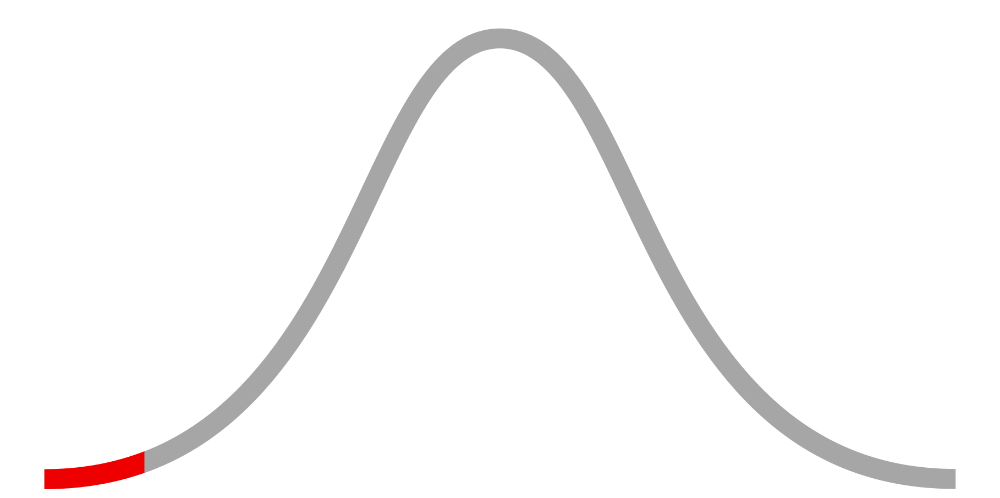
Very Low

5–10% percentile
A very low attribute score is rare because it represents 5% of the entire population. In a room with 100 other people, a person with a very low attribute score would be higher than five of them and lower than 90 of them.
Note: Feels uses a 9-point scoring scale that ranges from Ultra Low to Ultra High according to a normal distribution. See our methodology.

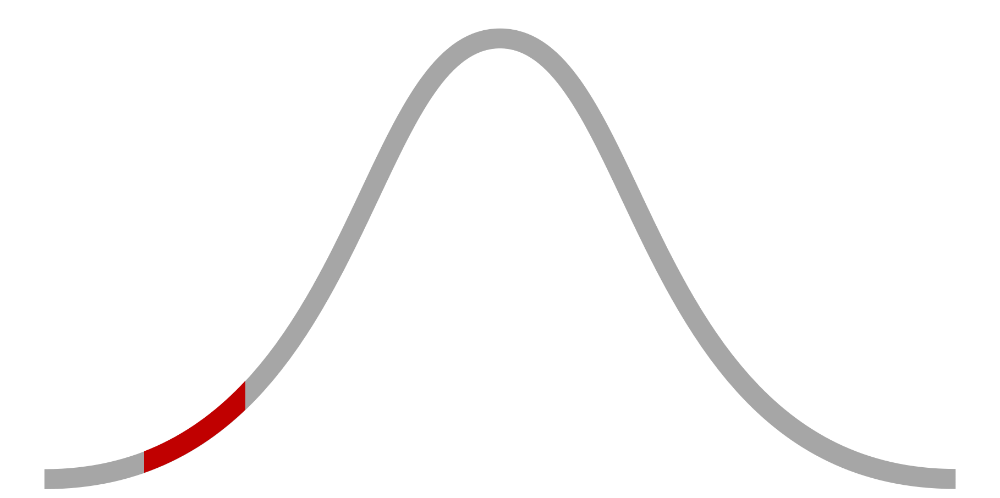
Low

10–20% percentile
A low attribute score is somewhat uncommon and represents 10% of the entire population. In a room with 100 other people, a person with a low attribute score would be higher than ten of them and lower than 80 of them.
Note: Feels uses a 9-point scoring scale that ranges from Ultra Low to Ultra High according to a normal distribution. See our methodology.

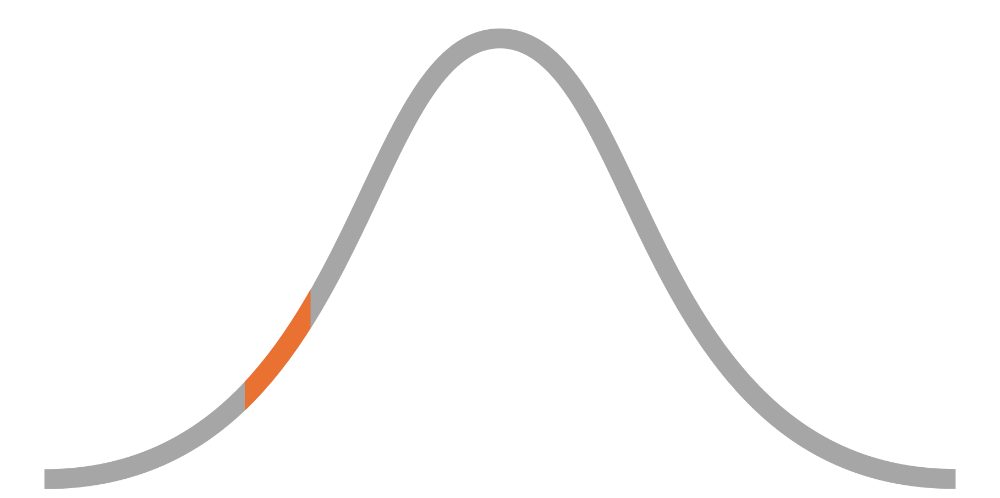
Slightly Low

20–40% percentile
A slightly low attribute score is common and represents 20% of the entire population. In a room with 100 other people, a person with a slightly low attribute score would be higher than 20 of them and lower than 60 of them.
Note: Feels uses a 9-point scoring scale that ranges from Ultra Low to Ultra High according to a normal distribution. See our methodology.

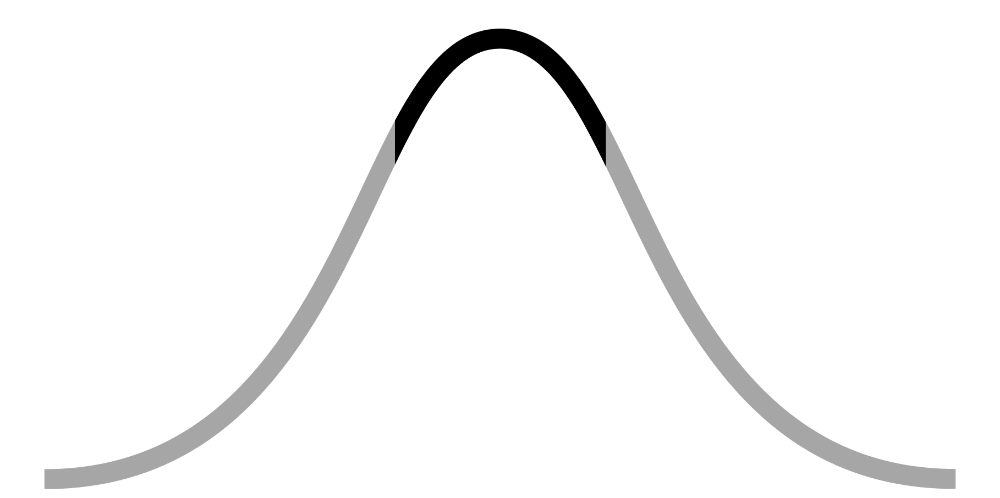
Average

40–60% percentile
An average attribute score is typical and represents 20% of the entire population. In a room with 100 other people, a person with an average attribute score would be higher than 40 of them and lower than 40 of them.
Note: Feels uses a 9-point scoring scale that ranges from Ultra Low to Ultra High according to a normal distribution. See our methodology.

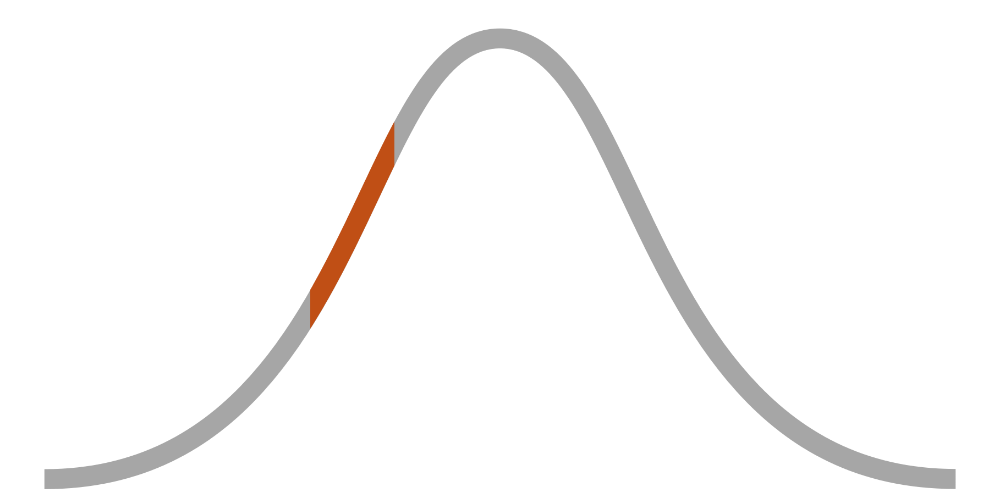
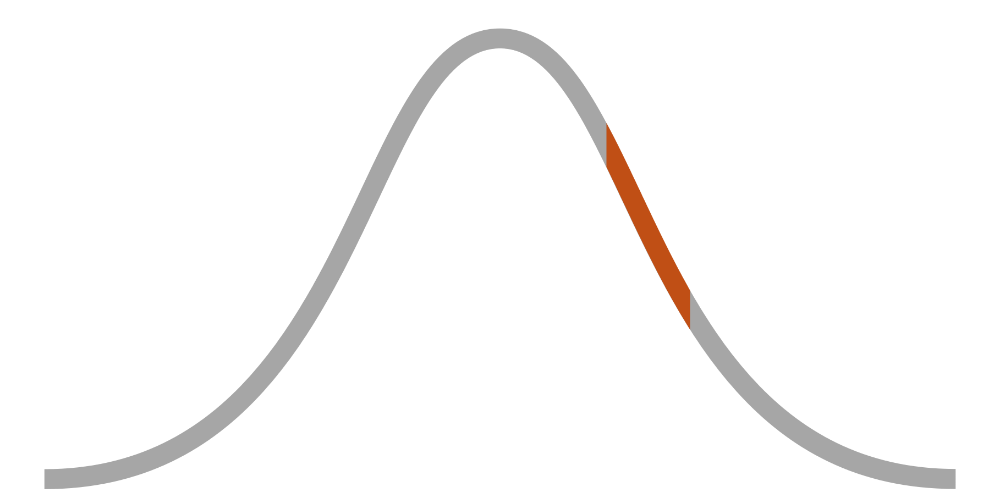
Slightly High

60–80% percentile
A slightly high attribute score is common and represents 20% of the entire population. In a room with 100 other people, a person with a slightly high attribute score would be higher than 60 of them and lower than 20 of them.
Note: Feels uses a 9-point scoring scale that ranges from Ultra Low to Ultra High according to a normal distribution. See our methodology.

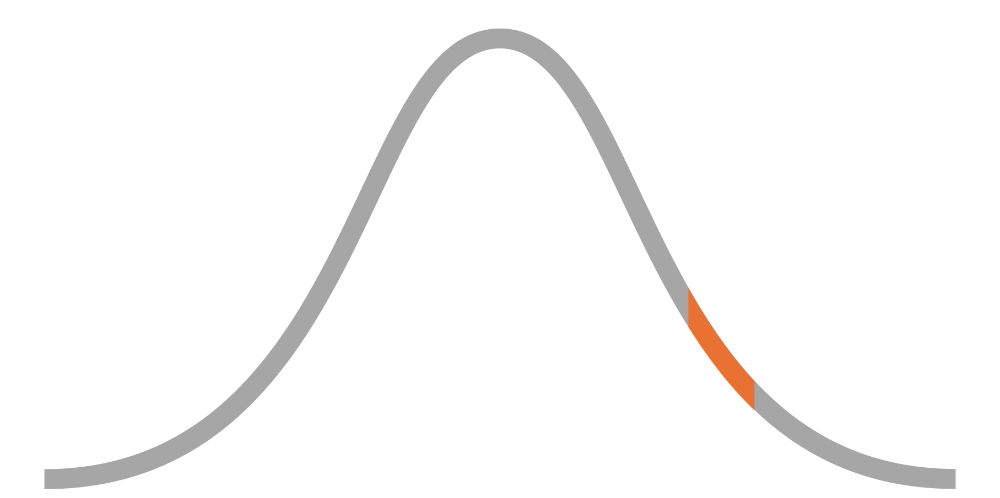
High

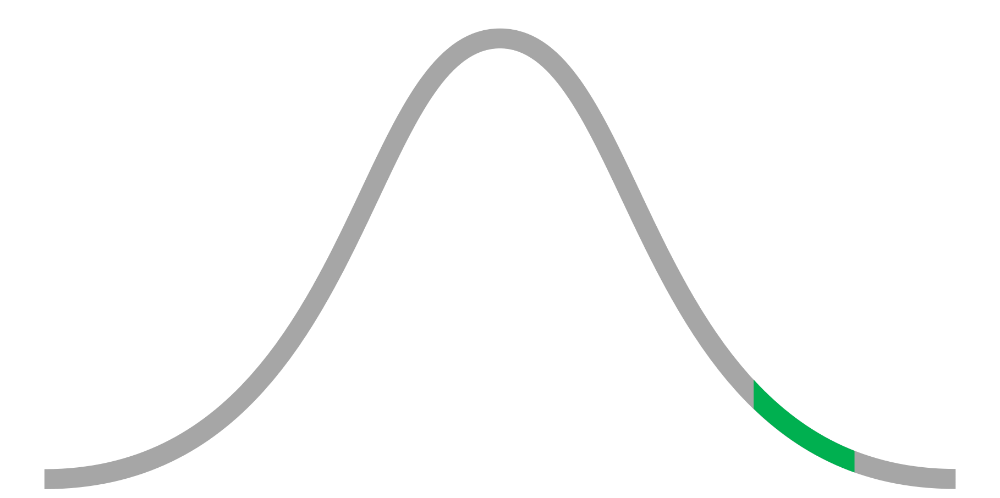
80–90% percentile
A high attribute score is somewhat uncommon and represents 10% of the entire population. In a room with 100 other people, a person with a high attribute score would be higher than 80 of them and lower than 10 of them.
Note: Feels uses a 9-point scoring scale that ranges from Ultra Low to Ultra High according to a normal distribution. See our methodology.

Very High

90–95% percentile
A very high attribute score is rare because it represents 5% of the entire population. In a room with 100 other people, a person with a very high attribute score would be higher than 90 of them and lower than five of them.
Note: Feels uses a 9-point scoring scale that ranges from Ultra Low to Ultra High according to a normal distribution. See our methodology.

Ultra High

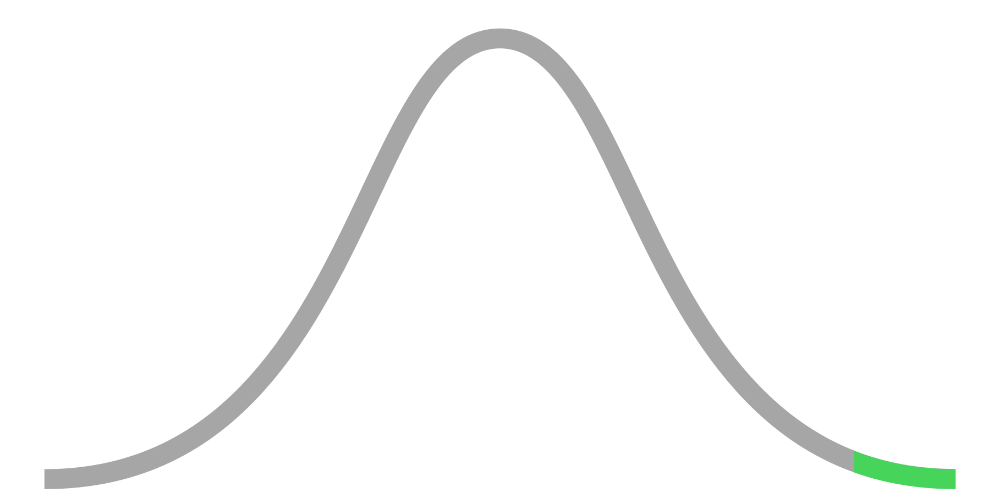
95–100% percentile
An ultra high attribute score is exceptionally rare because it represents 5% of the entire population. In a room with 100 other people, a person with an ultra high attribute score would be higher than 95 of them and lower than none of them.
Note: Feels uses a 9-point scoring scale that ranges from Ultra Low to Ultra High according to a normal distribution. See our methodology.