
Info
© 2026 Feels Co.
 Summary & key points
On September 14, 2023, UFC boss Dana White joined the famous UK broadcaster Piers Morgan for an interview on Morgan's YouTube channel, Piers Morgan Uncensored ("Piers Morgan vs Dana White | The Full Interview"). Morgan began asking Dana questions about his parents and upbringing, a topic that Dana usually avoids. As the questions became more personal, Dana politely set clear boundaries by shying away from certain details. For example, Dana disclosed that his parents recently passed away, but avoided providing specific dates or details. This is unlike the UFC boss who, having done many press conferences, is trained in and comfortable with sharing precise numbers and facts. The topic was exhausted when Dana remarked that the questions reminded Morgan of his own wife. Dana White's reluctance to provide precise information about his relationship with his own parents demonstrates a below-average example of the Specificity attribute.




Summary & key points
In season 2, episode 24 ("Valley Girls") of the hit TV show Gossip Girl (2009), high schooler Blair Waldorf is vying for prom queen as she discovers new information about her progress. During the prom queen announcement portion of the school function, Blair accuses Chuck of sabotaging her with fake votes against her. However, others were scheming against Blair and Chuck actually submitted 150 votes in order to help Blair win prom queen. Blair's use of deductive reasoning and analyses of Chuck's actions, although incorrect, demonstrate an above-average example of the Inference attribute.


Summary & key points
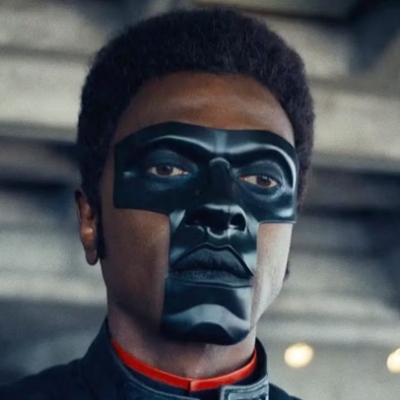
Mister Terrific is shown walking out of the Justice League's dedicated base – the Watchtower. His colorful outfit and strong look makes it clear that he means business.
Summary & key points
In season 6, episode 10 of the hit HBO show called Game of Thrones (2003), Cersei Lannister is about to execute a plan to blow up the location of her trial – and she's notably absent. Of all people present, only Margaery Tyrell knows what's really going on. Margaery interrupts the high priest and explains that Cersei's absence is not intentional, but calculated. Margaery infers there is danger and urges everyone to leave, even at the expense of her normally polite demeanor. Sure enough, the building soon exploded as Cersei watched in satisfaction. Margaery's ability to engage in 'mental time travel' is demonstrated with her explanation as to why Cersei was not there, as well as her urge to exit the premises. This dialogue and behavior highlights the Inference attribute, even if it was too late for her character.

Summary & key points
In the hit movie The Batman (2022), a young Bruce Wayne played by Robert Pattinson delivers an opening monologue via a journal entry on a rainy night after the Mayor of Gotham City has been murdered. Batman describes the weather, presence of people, his years-long night-time habits, and nature of crime in the city. He notes that "fear is a tool" for would-be criminals because the city is too large and he can't be everywhere. The clip shows crime scenes in progress and ends with Batman stating that because of fear, "They think I'm hiding in the shadows – but I am the shadows." Batman seldomly uses language related to sensory perception, and instead focuses on describing people and crime, which demonstrates a below-average example of the Sensation attribute.

Summary & key points
In the hit sequel movie The Matrix Reloaded (2003), Neo goes to meet the Oracle, who can allegedly see the future. Without even looking, she tells Neo what is going to happen next on several occasions. This ability to engage in 'mental time travel' with events that have not happened yet highlights the Inference attribute to a degree that no real person can emulate.